

Effective Communication in Meetings: Top Skills Every Professional Needs
Introduction:
It is vital to have effective communication in meetings for conveying ideas clearly which fosters collaboration and aids decision-making in organizations. Also, Business English communication in meetings is crucial for maintaining positive work environment resolving conflicts and encouraging participation and engagement from fellow members. Effective communication in meetings keeps meetings on track and optimizes productivity of employees.
English is used as a business language across the world. Hence, it is significant in the corporate and business environment. Business communication skills are considered must-have skills for all professionals. In big organizations, employees need to communicate regularly with teams based in different countries. In such cases, without knowing English, communication is not possible. Also, if someone needs to learn new skills, build network, attract foreign investors to boost company’s growth or gather knowledge about regulatory framework, one has to be well-versed in English.
This blog post will discuss the significance of effective communication in business meetings and will explain strategies and challenges in achieving communication efficiency in English, in the context of meetings.
1. The Role of Meetings in Professional Life
India as a country has transformed into a globalized workplace due to the surge in multinational companies. Therefore, the significance of meetings across all small and big companies has increased. Meetings often help in bridging cultural differences, smoother decision making and allowing exchange of ideas more efficiently.
Different types of meetings in professional settings:
In professional set ups different types of meetings are conducted to achieve different objectives.
Team Meetings:

Team meetings are conducted to discuss issues that the team needs to handle, share updates on the progress of each project, and discuss any critical issues or fostering a sense of accountability and unity among the team members.
Client Meetings:
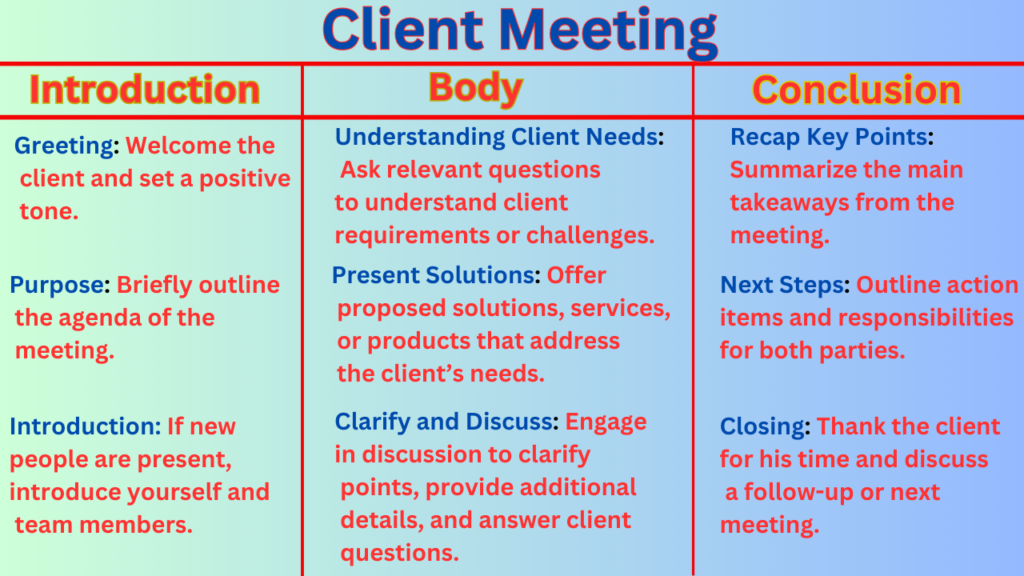
Meetings with clients are conducted to build network, to understand the need of the clients and offering them the right solution to their problem.
Presentations:
Presentations are held to explain key points to shareholders or to the top officials. The information in presentations should be concise and to-the-point. Data that is presented in presentations should be well explained with utmost clarity, to avoid any confusion.
Brainstorming sessions:
Companies often hold brainstorming sessions to boost innovation or to find feasible solutions to problems. It encourages participants to share their ideas freely without being judged.
Other Types of Meetings:
Other types, like training sessions, workshops, and one-on-one meetings, are also important for skill development and personalized feedback. By conducting these forms of meetings, organizations can achieve optimal productivity, innovation and cooperation.
Example:
Meetings in multinational companies in India like TCS, Infosys, and Wipro, where English is the default communication medium.
2. Common Communication Challenges in Indian Meetings
In Indian professional settings, professional often face various challenges which can range from cultural differences, differences in English proficiency level and confidence levels.
Cultural factors:
In the Indian context, individuals are always told to resect their seniors and never express any adverse opinion, even if, they don’t agree to it fully. This is deeply rooted in the cultural values which hamper the flow of ideas freely, even in the professional meetings. In some case, employees struggle to even speak in front of their seniors because of the hierarchy and that; they don’t wish to contradict their seniors. They prefer to communicate indirectly which often leads to confusion.
Language proficiency:
Issues faced by non-native English speakers in fluency, accent, and vocabulary. Many professional in India struggle to express their thoughts in English due to limited exposure to the language. Under the pressure of participating in a meeting actively, they fail to express clear thoughts which results in frustration and disappointment.
Confidence barriers:
In case of many professionals, they face dual pressure- not being able to communicate effectively as well as the discomfort of speaking in front of seniors. This can lower their confidence level significantly. In such scenarios, either they fumble while articulating their thoughts or end up saying things different from what they thought of saying. Additionally, they face the fear of making grammatical mistakes or mispronunciation.
Example:
A professional in a middle-management role hesitating to express opinions in an English-dominant meeting, leading to a lack of participation.
3. Preparing for an English-Language Meeting
Setting the agenda:
The agenda for the meeting should be planned, well in advance, for effective communication in meetings. The key points to be covered in the meeting and how to achieve the logical flow of ideas during discussions, also, requires planning. The list of potential questions, counterarguments and the responses should also be thought of, before the meeting.
Example: How an Indian project manager can effectively prepare for a client meeting by structuring their points in English.
Learning key business vocabulary:
Effective communication in meetings is possible only when one is aware of business-specific vocabulary. This ensures professional communication and a positive outcome from the meeting.
Example: Learning phrases like “Let’s table this for later” or “Can you elaborate on that?”
Rehearsing key points:
Practicing key points multiple times before the meeting, automatically, raises the confidence level. Also, one can deal with unexpected questions, raised during the meeting.
Example: Role-playing with a colleague before presenting in front of senior management.
Writing notes in English:
Making mind maps or writing notes, is a good practice to summarize the key points during meetings.
Example: Writing down key statistics in English when preparing a report presentation.
4. Speaking Clearly and Concisely
The art of brevity:
Avoiding very lengthy explanations and staying on the topic shows professionalism.
Example: A marketing professional explaining campaign results in under 3 minutes in a client meeting.
Using simple language:
No jargons or informal language should be used in meetings to ensure that all participants understand the points well.
Example: Breaking down complex technical ideas into simple English for a non-technical audience.
Pacing and clarity:
Speaking slowly and clearly is appreciated, so that, participants from all cultures and backgrounds can follow.
Example: An IT consultant giving clear instructions to an international team in a meeting.
5. Active Listening and Responding
Listening for key information:
To be an active listener is crucial to conduct a successful meeting. This makes everyone participate in the discussion actively.
Example: A software developer listening attentively to client feedback in a meeting to make quick changes.
Responding appropriately:
Responding properly to the points being made, is important. Also, constructive feedback should be given and only relevant questions should be asked.
Example: Phrases like “I understand your point” or “Can we explore this idea further?”
Handling interruptions or disagreements:
It is common to have differences of opinion or conflicts which must be handled respectfully to have effective communication in meetings.
Example: Handling disagreements diplomatically in a heated team meeting discussion.
6. Managing Cross-Cultural Meetings
Understanding different accents and communication styles:
Understanding various accents and styles of communication is expected if the participants are diverse, in a multinational company.
Example: A finance team lead in India managing calls with US-based stakeholders and adapting to different English accents.
Cultural sensitivities:
One should be sensitive enough not to allow any miscommunication by being aware of cultural differences in how meetings should be conducted globally.
Example: Using appropriate greetings, politeness levels, and expressions in meetings with Western clients versus Indian clients.
Adapting communication style:
One needs to adjust one’s communication style based on the audience- using formal style for seniors and interaction-based style for peers.
Example: Adopting a formal tone in English during meetings with higher-level executives versus a more casual tone with colleagues.
7. Presenting in Meetings
Structuring your presentation:
Organizing the content in such a manner that it is easy to follow for everyone in the meeting, is a good practice for effective communication in meetings.
Example: Using the “Introduction – Body – Conclusion” structure when giving a project update.
Using visual aids effectively:

Make use of visual aids, wherever possible, for clear understanding. (slides, graphs, etc.).
Example: A sales professional presenting market data using easy-to-understand charts and graphs in PowerPoint.
Handling Q&A sessions confidently:
Q&A session should be conducted responsibly to ensure that all doubts are cleared.
Example: Anticipating client questions and preparing answers in advance, so the Q&A session flows smoothly in English.
Overcoming nervousness:
Nervousness is obvious before the meeting. Try using some ways to stay calm and confident during the meeting.
Example: Breathing exercises or positive visualization before presenting a financial report to the board.
8. Common English Phrases for Professional Meetings
Useful opening phrases:
Examples like “Let’s get started” or “Shall we move to the next point?”
Clarifying points:
Phrases like “Could you clarify that further?” or “What I meant was…”
Agreeing and disagreeing professionally:
Using phrases like “I see your point, but…” or “I partially agree with your opinion…….”
Closing the meeting:
Phrases to wrap up effectively, like “Shall we summarize the key takeaways?” or “Thank you for your time, everyone.”
Example:
A team leader using these phrases during a monthly performance review meeting.
9. Building Confidence in English Communication
Practice makes perfect:
Practice regularly with your friends and colleagues, simulating the meeting situations, can help a lot in gaining confidence.
Example: An engineer practicing daily English conversations with team members to improve fluency.
Learning from feedback:
Make sure to invite constructive feedback from their peers and seniors. This will give insight into which areas need improvement.
Example: How an HR manager improved presentation skills by receiving feedback from a mentor.
Joining English-speaking clubs or courses:
Joining English communication groups or courses to improve confidence are highly suggested, to improve faster.
Example: The benefits of attending English speaking workshops specifically designed for corporate professionals.
Frequently Asked Questions (FAQs)
1. Why is effective communication in meetings so important for professionals?
Effective communication in meetings ensures that ideas are clearly expressed, discussions stay on track, and goals are met efficiently. Whether you’re leading or participating, strong communication builds credibility, reduces misunderstandings, and helps achieve productive outcomes that meet the needs of the intended audience.
2. What are the key elements of effective communication in business meetings?
Good communication in meetings depends on three main things: clarity, listening, and structure. Speak concisely, stay focused on the agenda, and show respect for others’ opinions. Non-verbal cues like eye contact and tone of voice also play a vital role in maintaining professionalism and engagement.
3. How can I communicate effectively in meetings when I’m not confident?
If you often wonder how to speak in meetings with confidence and authority, preparation is key. Review the agenda, note your main points, and practice introducing your ideas clearly. Speaking slowly, maintaining good posture, and making brief pauses before key points help you sound more confident and in control.
4. How can I speak in a meeting without fear or nervousness?
Overcoming the fear of speaking in meetings takes practice. Start small—contribute one idea per meeting, and gradually increase participation. Breathing exercises, mental rehearsal, and focusing on the message instead of yourself can ease anxiety. This approach helps you speak in meetings with confidence over time.
5. What’s the best way to communicate effectively in team meetings?
For effective communication in team meetings, focus on active listening, giving credit where due, and keeping discussions solution-oriented. Summarize key points to ensure everyone is aligned. Encourage input from quieter members to create a collaborative, respectful atmosphere.
6. How is effective communication in virtual meetings different from in-person meetings?
Effective communication in virtual meetings requires extra clarity because body language is limited. Use a calm tone, avoid talking over others, and use visuals or chat tools to reinforce key points. Also, test your microphone and camera beforehand to avoid technical distractions that break communication flow.
7. How do I interact professionally when I’m not leading the meeting?
If you’re unsure how to talk in a meeting as a participant, focus on being engaged and responsive. Nod, take notes, and ask short, thoughtful questions. This shows professionalism and interest, even if you’re not presenting. Learn how to interact in meetings by observing how experienced colleagues contribute effectively.
8. What are some examples of how to speak in meetings effectively?
Here’s how to speak in meeting sample format you can use:
- Start: “I’d like to add to that point…”
- Clarify: “Just to make sure I understand…”
- Suggest: “Maybe we can consider this alternative…”
Using polite, confident language like this helps you sound credible and engaged in any professional discussion.
9. How can I ensure effective communication meets the needs of the intended audience?
Tailor your message to your listeners. For instance, use data and reports when addressing management, but keep things simple and actionable for team updates. Effective communication meets the needs of the intended audience by considering their goals, time, and level of understanding.
10. How can I communicate effectively in meetings if English isn’t my first language?
If English isn’t your native language, prepare key phrases and vocabulary related to your work beforehand. Listen actively, paraphrase for confirmation, and don’t rush your speech. Over time, you’ll gain confidence in how to communicate effectively in meetings, whether they’re face-to-face or virtual.
Conclusion:
Communication in meetings can be made effective by active listening, speaking confidently, giving effective presentations and preparing well. Practicing several times before the actual meeting will make one more confident. Also, it will prepare him to deal with unexpected questions. If the thoughts are well structured and presented with a logical flow, it is easy to keep the participants engaged throughout the meeting.
It’s important to reassure readers that improving business English communication skill, particularly in the context of meetings, is a gradual process. Many professionals experience challenges when expressing themselves, especially in the second language. However, consistent practice can lead to significant improvements over time. By dedicating time to practice speaking, expanding vocabulary, and refining presentation skills, individuals can build their confidence and proficiency.
English communication is a skill that needs time to develop, especially, in the professional settings. One must observe and make changes in one’s style of communication to achieve the set objectives, in any meeting. It is alright to face challenges in the beginning, but with practice, efficiency can be achieved. Additionally, time should be allocated for expanding vocabulary, improving grammar knowledge and refining presentation skills, to achieve greater levels of confidence.
I encourage you to implement these tips in your next professional meeting. Start by practicing with colleagues and try to keep them engaged throughout. Remember that every meeting is an opportunity to practice and improve. Don’t forget to celebrate even if you make slight progress, on the way. With perseverance and dedication, you can hone your ability to communicate effectively which will strengthen your professional relationships and can be helpful in advancing your career.
Share your thoughts:
Share your experiences or challenges when speaking English in professional meetings and how you overcame them. Subscribe to the blog for more tips on professional English communication.
I create content to make English learning simple and practical. If you find it helpful, consider supporting me Your contribution helps me improve my skills and bring better content for you.



I view something genuinely special in this site.
Keep coming back for more!
Lovely just what I was searching for.Thanks to the author for taking his time on this one.
Thank you for your comment!
Magnificent goods from you, man. I have understand your stuff previous to and you’re just too excellent. I actually like what you’ve acquired here, really like what you are stating and the way in which you say it. You make it entertaining and you still care for to keep it sensible. I can’t wait to read far more from you. This is really a wonderful web site.
Thank you!
As a Newbie, I am constantly searching online for articles that can be of assistance to me. Thank you
Will bring more articles soon.
I’m extremely inspired along with your writing skills and also with the layout to your weblog.
Is this a paid theme or did you modify it your self?
Either way keep up the nice quality writing, it is rare to see a great blog
like this one nowadays.
Thank you for your inspiring words!
Only a smiling visitor here to share the love (:, btw great pattern. “The price one pays for pursuing a profession, or calling, is an intimate knowledge of its ugly side.” by James Arthur Baldwin.
Thank you for your lovely comment!
That is really interesting, You are an overly skilled blogger. I’ve joined your rss feed and sit up for in search of extra of your wonderful post. Additionally, I’ve shared your web site in my social networks!
Thank you so much! I promise to bring even more useful stuff soon. Thank you for sharing my website. 🙂
I really delighted to find this web site on bing, just what I was looking for : D also saved to favorites.
Thank you and i’m glad to know that you found my site helpful.:)
Pretty section of content. I just stumbled upon your weblog and in accession capital to assert that I acquire actually enjoyed account your blog posts. Anyway I’ll be subscribing to your feeds and even I achievement you access consistently fast.
Thank you for your positive feedback!
I am impressed with this site, really I am a big fan .
Thank you for your lovely comment! Subscribe to the site and keep coming back for more.:)
Everything is very open and very clear explanation of issues. was truly information. Your website is very useful. Thanks for sharing.
You’re welcome! Subscribe for more.
I think this website contains some rattling wonderful info for everyone. “The best friend is the man who in wishing me well wishes it for my sake.” by Aristotle.
Thanks for such a wonderful thought!
What’s Going down i’m new to this, I stumbled upon this I have found It positively helpful and it has aided me out loads. I’m hoping to give a contribution & assist other customers like its helped me. Good job.
That’s really very sweet of you! Thank you for your feedback. Subscribe for more.
I am constantly thought about this, thanks for putting up.
You’re welcome! Subscribe for more.